So, is your IPTV service on the right side of the law? Here's the straight scoop: the technology itself is 100% legal. The real question isn't about IPTV as a concept, but where the content is coming from.
A legitimate IPTV service is just like your cable company or Netflix—they pay licensing fees to broadcast channels. An illegal one, on the other hand, is just pirating that content and selling it to you without permission.
Most of the confusion around IPTV's legality comes from how the shows get to your screen, not the tech making it happen. Think of it this way: a Blu-ray player is perfectly legal. But its use becomes illegal the second you pop in a pirated movie disc. IPTV works on the exact same principle. It's just a method for delivering TV over the internet instead of old-school satellite dishes or coaxial cables.
The IPTV market is absolutely exploding, thanks to faster internet speeds and the massive popularity of smart TVs and streaming sticks. It’s clear that people want flexible, internet-based television. The market was already valued at approximately $160.44 billion and is on a steep upward climb, which tells you just how mainstream this has become. You can read the full market analysis from American Business Times to dig into the numbers yourself.
The line between a legal and an illegal IPTV service boils down to one critical thing: content licensing.
A legal provider, like Sling TV or a verified service such as IPTV Now, goes through the proper channels to secure the rights for every single channel they offer. They pay the creators and networks for permission to distribute their content.
An illegal provider skips all that. They simply capture the broadcasts and re-stream them without paying a dime to the people who actually made the shows. That's the whole game.
This handy decision tree breaks it down visually.
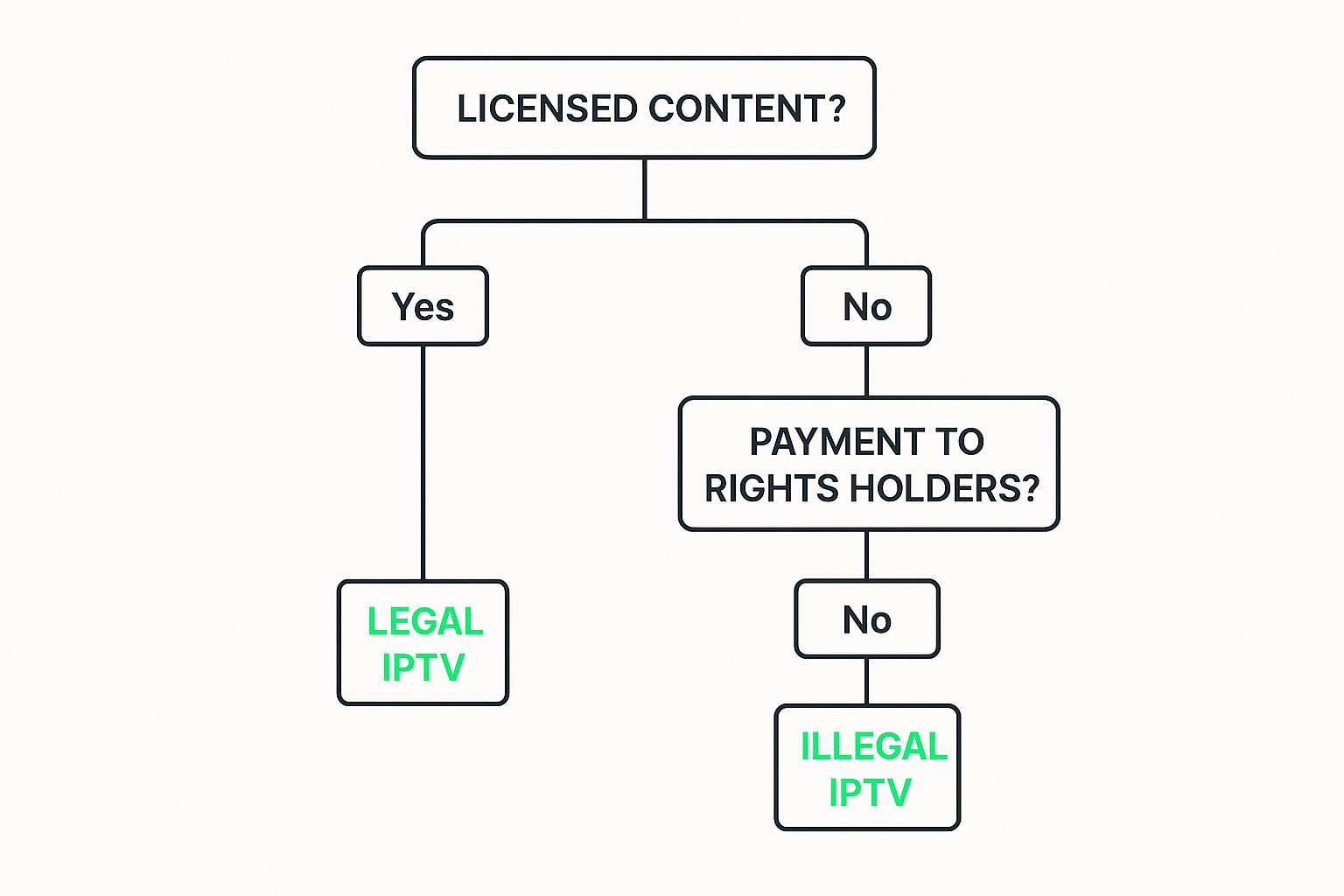
The takeaway is simple: if the provider isn't paying the rights holders for the content, the service is illegal. Period.
To really get the most out of a legit IPTV service, you'll want a solid streaming device. Something like the Amazon Fire TV Stick 4K is a fan favorite, giving you great performance without breaking the bank. Just remember, the device is only as good as the service you connect it to.
Still a bit fuzzy? This quick comparison table should help you spot the key differences between a legitimate service and a shady one.
| Feature | Legal IPTV Service | Illegal IPTV Service |
|---|---|---|
| Price | Reasonable monthly fees (e.g., $20-$70/month) | Unbelievably cheap (e.g., $5-$15/month for thousands of channels) |
| Channel Selection | A curated, realistic number of licensed channels | An absurdly large list, often including every premium channel from around the world |
| Payment Methods | Standard credit/debit card, PayPal, official app store billing | Often requires cryptocurrency, gift cards, or other untraceable methods |
| Customer Support | Professional support via official channels (email, phone, chat) | Limited, unreliable, or non-existent support, often through Discord or Telegram |
| Availability | Available on major app stores (Google Play, Apple App Store, Amazon Appstore) | Requires "sideloading" an APK or using a generic player with an M3U link |
| Reliability | Stable streams, high-quality video, and consistent uptime | Frequent buffering, channels disappearing, and service shutdowns |
| Contracts | Clear terms of service, official website, and transparent business info | No official website or company info, vague or non-existent terms |
Looking at this, the signs of an illegal service become pretty obvious. If an offer seems too good to be true—like getting every channel in existence for the price of a coffee—it almost certainly is. Sticking with providers that operate transparently is the only way to ensure you’re staying on the right side of the law.

To really get what makes an IPTV service legal, it helps to think of it like your local movie theater. The theater doesn't own the blockbusters it shows, right? Instead, it pays the big movie studios for the rights to screen them for everyone buying a ticket. This is the basic idea behind any legit entertainment service.
A legal IPTV provider plays by the exact same rules. Behind the curtain, they're busy making deals and paying for licenses from TV networks, content producers, and broadcasting companies. This whole process makes sure that everyone who worked hard to create the shows you love—from the actors on screen to the crew behind the scenes—gets paid for their work.
This isn't a simple handshake deal; it involves detailed contracts. These agreements spell out exactly which channels and shows the provider can stream, what parts of the world they can show them in, and for how long. It's a complicated but super important part of how media works. A legal IPTV service gets the proper content rights through these official licensing agreements. If you're curious about the nitty-gritty, an Intellectual Property Licensing Agreement Guide can give you a peek into the legal side of things.
So, where do you fit in? Your part is simple: you subscribe to one of these licensed providers and use a good player to watch their content. This is where the tech comes into play. To get a better handle on how all this streaming magic happens, you can check out our guide on https://freeiptvplayer.net/what-is-iptv-and-how-does-it-work/.
It's a big world out there, and the rules for these agreements change depending on where you are. In fact, the Asia-Pacific region makes up nearly 48% of the entire IPTV market, mostly because so many people have access to the internet and love streaming content.
Once you've picked a legal provider, you just need two things to get going: a solid internet connection and a reliable streaming device.
Think of a dependable device as the bridge connecting your legal IPTV subscription to your TV screen. Spending a little on good hardware means you’ll get that smooth, high-def experience you're paying for, without any of those annoying tech headaches.
Some of the most popular choices are devices that are easy to get started with and work with tons of apps.
Protecting yourself from shady operators really boils down to knowing what to look for. The pull of a super-cheap service is strong, I get it. But illegal providers often have the same tell-tale signs that are easy to catch if you’re paying attention.
Learning to spot these red flags is your best defense. It's the most important step you can take to make sure your IPTV setup is legal, safe, and won't just vanish overnight.
The biggest and most obvious sign? A price tag that just seems too good to be true. If a service is dangling thousands of premium global channels for just a few bucks a month, your alarm bells should be ringing. Legal services have real costs for licensing content, and that's always reflected in their price.
Another massive red flag is how they want you to pay. Illegal services will do anything to avoid standard payment systems that can be traced and shut down.
If a provider is pushing for payment through untraceable methods like cryptocurrency (think Bitcoin or Ethereum) or even gift cards, that's a huge indicator they're operating in the shadows. Legitimate businesses use standard, secure processors you know and trust, like credit cards and PayPal.
This whole song and dance is designed to make it nearly impossible for authorities—or for you, when you want a refund—to follow the money.
Beyond the price and payment options, the overall vibe of the service tells you a lot. A real business invests in its website, its support, and its overall presentation. A pirate operation? They usually cut every corner possible.
A professional, well-put-together website with clear terms of service and actual contact info is a great sign. On the flip side, many illegal outfits run their entire show from temporary websites or through social media channels like Telegram or Discord.
You should also check out where you get their app.
Lastly, think about the support and reliability you're getting. A legal provider will have a real customer support team ready to help with tech problems or billing questions. Illegal services? You'll be lucky to get a vague response, if you get one at all.
Their streams are notoriously unreliable, too. You'll deal with constant buffering, channels that disappear for no reason, and the ever-present risk of the entire service being shut down without any warning.
Picking an illegal service is more than just a legal gamble; you’re opening the door to malware, data theft, and a genuinely frustrating viewing experience. A secure setup always starts with quality hardware. Investing in a trusted device like the NVIDIA SHIELD Android TV Pro from Amazon ensures your hardware is secure and has the muscle for high-quality, legal streaming.
Now that you know how to spot the red flags, you’re ready to dive into the safe and reliable world of legal IPTV. The great news is, you've got plenty of high-quality, legitimate options to choose from. This means you can finally get the stable and secure streaming experience you deserve, and stop wondering if an IPTV service legal standing is on shaky ground.
The big names in streaming have already planted their flags firmly in this space. Services like Sling TV, YouTube TV, and Hulu + Live TV are perfect examples of providers that operate completely by the book. They do the hard work of securing all the necessary content licenses, so you get a dependable service without any legal gray areas.
On top of that, many of your traditional internet and cable providers have jumped on board, too. Think of companies like Verizon with its Fios TV service, which now offers its own IPTV packages. These are often bundled right in with your internet service, guaranteeing a licensed and seamless viewing experience.
But the world of legal IPTV doesn't stop with the household names. A growing number of independent providers offer fantastic, verified services. If you're looking for a flexible and legitimate alternative that plays nicely with all sorts of different devices and players, a provider like IPTV Now is a great choice. They make legal compliance a top priority, which gives you real peace of mind.
To help you sort through all the choices, you might find our guide on the best IPTV providers in 2023 helpful.
When you're looking at legal IPTV options, it's good to remember that these services follow strict media regulations. They invest a ton of money into licensing to stay clear of the legal messes that plague the illegal operators.
Understanding this background is really the key to making a smart choice. When you're checking out different providers, knowing the common mistakes in media law helps you appreciate the value and security that comes with a fully licensed provider.
To really get the most out of your legal IPTV subscription, you'll want to pair it with some powerful hardware. A high-performance streaming device is the secret to getting that smooth, buffer-free playback, crisp picture quality, and a snappy user interface.
The market for legal IPTV just keeps on growing. North America is leading the charge, holding a dominant 42.5% share of the global market. Valued at around $94.07 billion, this industry is set to explode as more and more people demand high-quality, authorized streaming content.
That rock-bottom monthly price for an illegal IPTV service looks amazing on the surface, doesn't it? It’s a tempting offer, but it comes with a whole lot of hidden costs that go way beyond a few bucks.
While the big legal battles usually target the people selling and distributing these services, you're not completely off the hook as a user. Depending on where you live, getting caught using an illegal stream could land you with some hefty fines for copyright infringement.
But honestly, the more immediate dangers are the ones that hit your wallet and your computer. These shady, unregulated platforms are often packed with malware, spyware, and viruses. Their real goal? To snatch your personal information right off your device. Every time you log in, you're basically rolling out the welcome mat for cybercriminals.
The financial risks are just as real. Think about it: you're handing your credit card details over to a completely anonymous website with no security and no accountability. Those payment pages are rarely secure, which puts your banking information at a massive risk of being stolen and used for fraud.
Beyond the security nightmare, the actual viewing experience is a total gamble. When you pay for a legitimate service where the IPTV service legal status is clear, you're paying for reliability. Illegal services give you none of that.
Choosing a legal provider isn't just about following the rules—it's a direct investment in your own cybersecurity, peace of mind, and getting a dependable entertainment experience that actually works when you want it to.
If you go with an unauthorized provider, get ready for a frustrating ride. Technical problems aren't just a now-and-then thing; they're baked into the experience.
After a while, you start to wonder what you're even paying for. If you're tired of the headaches and high costs of old-school TV, our guide on how to cut cable TV offers much better, and legal, ways to get a great viewing experience.
Getting your perfect legal streaming setup going is way easier than it sounds. If you follow a few simple steps, you can build a system that's secure, reliable, and keeps you on the right side of the law.
The first move—and honestly, the most important one—is picking a provider you can trust. You need a company that guarantees its content is fully licensed. A verified service like IPTV Now is a solid place to start because they operate in the open and secure the proper rights for their channels. Making the right choice here is the foundation of your entire setup and keeps you clear of the risks that come with sketchy, unauthorized streams.
Next up, you'll want to pick the right hardware for your needs. A user-friendly and powerful device makes all the difference and prevents a lot of headaches down the line.
An Amazon Fire TV Stick 4K is a fantastic, plug-and-play option for pretty much any TV. It’s simple to set up and gives you access to a ton of apps. More importantly, its performance is strong enough to deliver a high-quality picture without that frustrating lag or buffering. It's a reliable workhorse for any legal service.
Once your device is ready, you'll need a good online IPTV player to handle the streams. A browser-based player is a great, no-fuss option because you don't have to install any apps, letting you jump right in. If you want a bit more detail on this part, our guide on how you can get IPTV breaks down those initial steps.
The last piece of the puzzle is securely configuring your setup. This just means plugging your provider's details into the player you chose and making sure your home network is optimized for a smooth, buffer-free, high-definition picture every time you tune in.
Follow these simple steps, and you’ll have a secure, legal, and genuinely enjoyable streaming system running in no time. That little bit of effort upfront gives you total peace of mind and a much better entertainment experience.
Dipping your toes into the world of IPTV usually brings up a few questions. That's totally normal. Getting some straight answers helps you pick the right service and stream without looking over your shoulder. Let's clear up some of the most common things people ask about staying legal and safe with IPTV.
A big one is about using a VPN. The short answer? Yes, using a VPN is perfectly legal in most places, and honestly, it's just a smart thing to do for your online privacy in general. A VPN wraps your internet connection in a layer of encryption, but here's the key thing to remember: it does not make an illegal service legal. Its real job is to keep your data secure and stop your internet provider from throttling your connection just because you're streaming.
Another question we see all the time is about M3U files. Think of an M3U file as just a simple playlist, like a list of songs for a music player. It just tells your IPTV player where to find the video streams. On its own, the file is just a piece of harmless, totally legal technology.
The legality all comes down to where that playlist is pointing.
The big takeaway here is to always know where your M3U playlist is from. A legit provider won't be shy about its licensing and legal status. This keeps you on the right side of copyright law and helps you dodge the malware and security nightmares that often come with pirate streams.
Finally, people often wonder what could really happen if they watch an illegal stream. While the authorities are usually busy chasing the people distributing the content, users aren't completely off the hook from fines in some countries. The dangers you're much more likely to face are malware, viruses, and having your personal data stolen.
The only foolproof way to avoid all that trouble is to stick with a legal provider and use a secure device, like a good Android TV Box.
At Free IPTV Player, we've built a secure, browser-based platform so you can enjoy your legally sourced M3U playlists without any downloads or fuss. Ready to give it a try? Visit us at https://freeiptvplayer.net to get started.