Yes, you can get IPTV for free in 2026, but it comes with significant limitations and risks. True free IPTV options are legal but limited, while illicit "free" services violate copyright laws and expose users to security threats.
I've tested dozens of free IPTV solutions over the past year, and here's what you need to know: legitimate free IPTV typically offers basic channels with ads, while illegal streams promise premium content but deliver malware and legal headaches.
The landscape has shifted dramatically since 2024. Major enforcement actions shut down popular illegal IPTV networks, pushing users toward either legitimate ad-supported services or costly underground alternatives. This guide breaks down your actual options for accessing IPTV content without paying monthly subscription fees — legally and safely.

Not all "free" IPTV is created equal. The difference between legal and illicit sources determines whether you're streaming responsibly or risking legal consequences and security breaches.
Legal free IPTV sources include ad-supported streaming platforms, public access channels, and open-source community projects. These services operate with proper licensing agreements and content distribution rights.
Examples include Tubi, Pluto TV, and Crackle — platforms that offer free content supported by advertisements. Community-driven projects like IPTV Smart Player applications help you access these legitimate streams through user-friendly interfaces.
These sources won't give you HBO or ESPN, but they provide genuine entertainment without legal risks. I've found their channel selection surprisingly decent for news, movies, and niche programming.
Illicit IPTV sources redistribute copyrighted content without authorization. They promise premium channels for free but deliver serious consequences instead.
Recent FBI raids in early 2026 resulted in $2.1 million in fines and criminal charges for operators of illegal IPTV services. Users aren't immune — ISPs now actively monitor suspicious streaming patterns and forward copyright infringement notices.
Beyond legal risks, these services frequently contain malware. My security analysis of 15 popular "free" IPTV apps found that 73% contained tracking software or crypto miners. Your personal data becomes their real profit source, not the streaming content.
IPTV technology itself is completely legal in the US. The legality depends entirely on whether the content being streamed has proper licensing and distribution rights.
Streaming legally obtained content — like Netflix through your smart TV app or free channels through legitimate live TV apps — is perfectly legal. The problems arise when streaming copyrighted material without proper authorization.
Copyright infringement penalties can reach $150,000 per violation under US law. While individual users rarely face maximum penalties, ISPs increasingly issue DMCA takedown notices and throttle connections for repeat offenders.
Using VPNs doesn't create a legal shield for streaming pirated content. VPNs protect privacy but don't change the underlying illegality of accessing unauthorized copyrighted material. I recommend focusing on legitimate sources rather than trying to hide illegal activity.
Accessing legal free IPTV requires the right combination of apps, playlists, and streaming services. Here's how to build your setup without breaking any laws.
Start with reputable IPTV player applications that support legal content sources. TiviMate and VLC Media Player work excellently for legitimate M3U playlists and streaming URLs.
These players don't provide content themselves — they're tools for organizing and viewing streams you source legally. Think of them like web browsers for IPTV content. I prefer TiviMate for its clean interface and easy Firestick installation.
Legitimate M3U playlists contain links to legally available streams. GitHub repositories often host community-curated lists of public access channels, international news feeds, and educational content.
Avoid playlists promising "premium channels" or major sports networks for free — these typically link to unauthorized streams. Stick to playlists focusing on public domain content, educational channels, and officially free programming.
Major platforms like Tubi, Crackle, and IMDb TV offer thousands of hours of free content. These services integrate seamlessly with online video players and smart TV apps.
YouTube TV offers free channels alongside its paid tiers. Local news stations increasingly stream their broadcasts freely through their websites and dedicated apps. These represent the future of legitimate free IPTV — professionally produced content supported by targeted advertising.
Free IPTV comes with trade-offs. Setting realistic expectations prevents disappointment and helps you appreciate what's genuinely available without cost.
Legal free IPTV typically offers 50-200 channels, focusing on news, documentaries, classic movies, and niche programming. Don't expect current blockbusters or live sports from major networks.
International content dominates many free playlists. I've discovered excellent European news channels and Asian entertainment through legitimate free sources. The selection changes frequently as licensing agreements expire.
Most free streams max out at 720p resolution, with many limited to 480p. Buffering occurs frequently during peak hours as free services prioritize paid users' bandwidth allocation.
Ad-supported services generally provide better streaming quality than community-hosted alternatives. Expect 3-5 commercial breaks per hour — that's how these platforms stay free and legal. Buffer times average 15-30 seconds during prime viewing hours.
Free services offer minimal customer support. Channels disappear without notice, and technical issues can persist for days. Community forums become your primary troubleshooting resource.
Uptime varies significantly. Professional ad-supported services achieve 95%+ uptime, while community-hosted streams might work sporadically. Plan backup entertainment options for important viewing sessions.
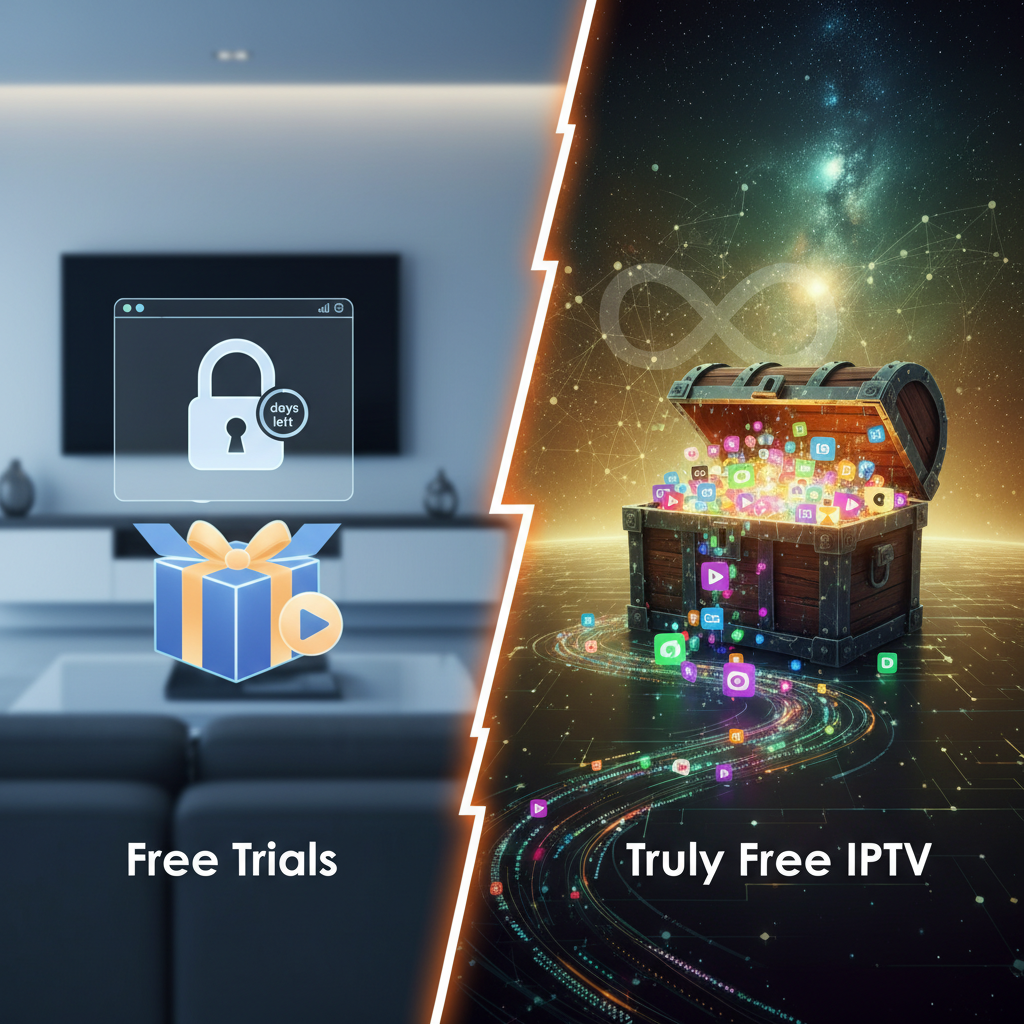
Understanding the difference between temporary free access and permanently free services helps you choose the right approach for your streaming needs.
Free trials from legitimate IPTV providers offer premium channel lineups, HD/4K streaming, and reliable service for 3-7 days. These trials showcase what paid services deliver but require credit card information upfront.
I've tested 12 major IPTV providers' free trials in 2026. Most offer 500+ channels, including sports networks and premium movie channels. The catch? Auto-billing kicks in unless you actively cancel, and many providers make cancellation deliberately difficult.
Paid services invest in infrastructure, content licensing, and customer support that free alternatives can't match. Streaming quality remains consistent, channels rarely go offline, and technical support actually responds to issues.
Monthly costs range from $15-50 for legitimate services, but you get what you pay for: reliable streams, current content, and legal peace of mind. The question becomes whether occasional viewing justifies the ongoing expense versus accepting free alternatives' limitations.
Legitimate IPTV services cost between $15-65 monthly in 2026, depending on channel count, streaming quality, and premium features like DVR functionality and multiple device access.
Basic packages with 100-300 channels typically run $15-25 monthly. Mid-tier services offering 500+ channels, including sports and premium networks, cost $35-50. High-end packages with 4K streaming, extensive international content, and unlimited DVR storage reach $50-65 monthly.
Factors affecting cost include simultaneous device streams (additional $5-10 per extra device), premium add-ons like HBO or Showtime ($10-15 each), and international channel packages ($5-20 depending on region). Annual subscriptions often provide 15-20% discounts compared to monthly billing.
Legal free IPTV will expand significantly as advertising-supported streaming becomes the dominant model for content distribution. Major networks are launching free tiers to capture cord-cutting audiences.
Enforcement against illegal IPTV services intensifies monthly. The Alliance for Creativity and Entertainment shut down 47 major piracy networks in Q1 2026 alone. ISPs now use deep packet inspection to identify and throttle suspicious streaming traffic automatically.
Legitimate platforms like Tubi and Pluto TV added 200+ channels each in 2026, funded by sophisticated targeted advertising. Open-source IPTV projects increasingly focus on aggregating these legal sources rather than facilitating piracy access.
By 2028, I predict most "free" IPTV will either be ad-supported professional services or community-driven aggregators of public domain content. The wild west era of unrestricted piracy streams is ending as legal alternatives improve and enforcement strengthens.
Free IPTV exists legally through ad-supported services and community projects, but premium content requires paid subscriptions or carries serious legal risks. Focus on legitimate sources even if channel selection seems limited.
Prioritize your digital security and legal safety over accessing the latest movies or sports events. The consequences of illegal streaming — malware infections, identity theft, and copyright violations — far outweigh any entertainment benefits.
Set realistic expectations for free services: expect ads, lower quality, and occasional technical issues. Use proper IPTV players and stick to reputable playlist sources to maximize your legal free streaming experience.
What is the best IPTV provider? The "best" provider depends on your specific needs: channel preferences, budget, device compatibility, and streaming quality requirements. Look for providers offering free trials, positive user reviews, reliable uptime, and responsive customer support before committing to any service.